


Saving our threatened species is not a quick fix, but rather takes a steady commitment to excellent research and informed action. The value of regular donations, large or small, to this research cannot be underestimated.
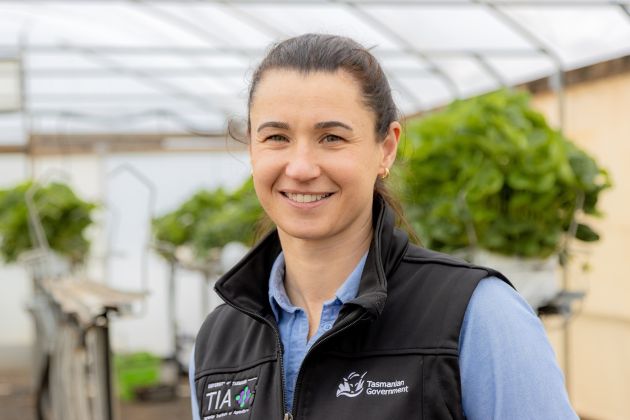
Bachelor of Arts alumna Tricia Sharples has always had a love of animals. From a young age she went bushwalking in Tasmania with her family, a pastime that reignited later in life as a love of trail-walking and running. But the constant was always a love of animals.
For sixteen years, Tricia has been making annual donations to the University, including donating to Tasmanian devil and handfish appeals.
“I was motivated by the plight of the devils,” Tricia said. “I can’t say I’ve ever seen one outside of Bonorong, but I was concerned about the facial tumour cancer which is so malicious.”
Since Tricia has been donating, research into the Devil Facial Tumour Disease has advanced remarkably, both in terms of field research and in the development of potential vaccines. Devil populations have stabilised in some areas of the State, but devil facial tumour 1 (DFT1) prevalence remains high, leading to mortality before reaching four years of age for most affected wild devils. Additionally, devil facial tumour 2 (DFT2), discovered in 2014 in southern Tasmania, poses an ongoing risk to the devil population.
In many parts of the State, devil populations have now stabilised. However, with the appearance of DFT2 ongoing work is needed.
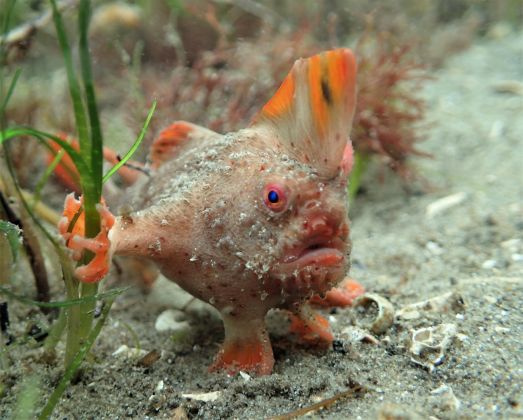
Tricia has also supported research into the critically endangered red handfish, which is only found in waters in southern Tasmania. Among the threats to the handfish is the proliferation of the invasive Northern Pacific seastar, which not only eats handfish but also the stalked ascidians that the handfish rely on as a spawning habitat.
“Having heard about the seastar and the damage they are causing made me worry about the handfish,” Tricia said.
“I wanted to support research to help get them back on track.”
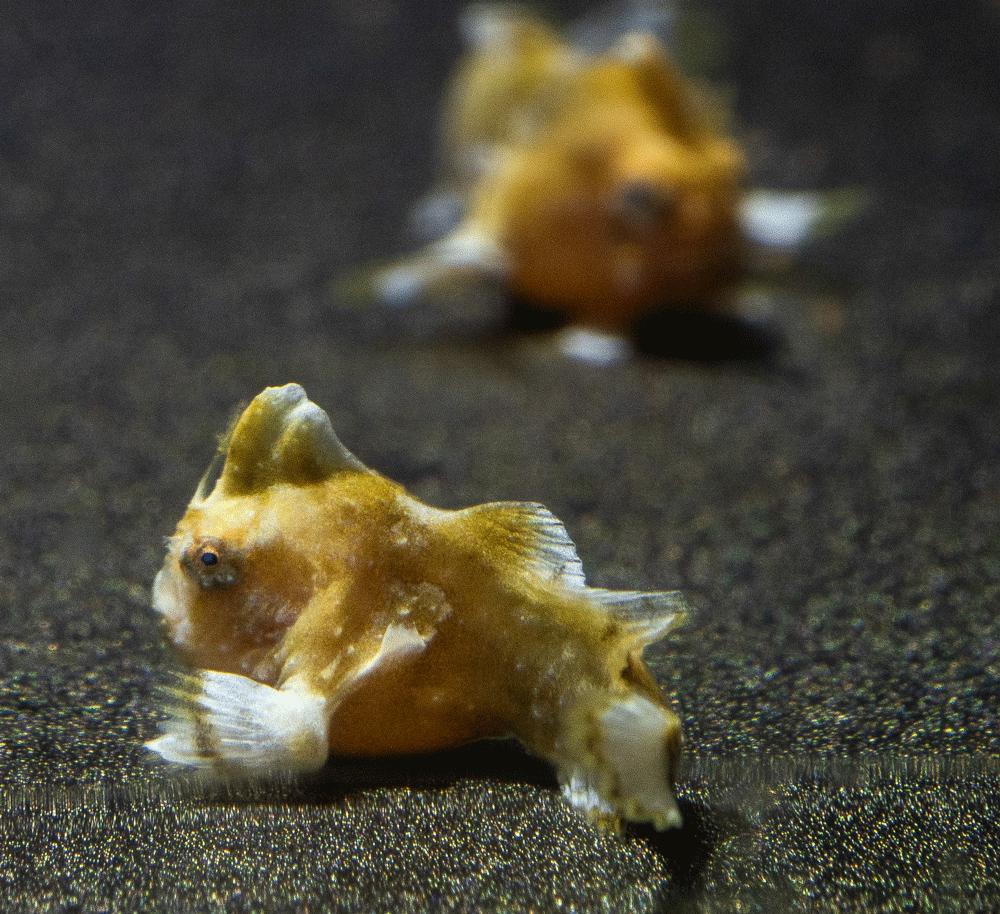
Regular donors such as Tricia add to the valuable support that is trying to save the species. The red handfish is still critically endangered, but in December 2024 the University reported on a remarkable conservation effort giving hope to the red handfish, with 232 hatchlings now thriving in the largest captive breeding event ever achieved for the species — a vital step in safeguarding the future of one of the world's rarest fish.
“This program is improving in leaps and bounds. These individuals represent triple the captive red handfish population in Tasmania,” said Institute for Marine and Antarctic Studies (IMAS) researcher Dr Andrew Trotter, who co-leads the handfish conservation breeding program.
Other species the University is working to conserve include the Maugean skate, which is found nowhere else on Earth; the spotted quoll, a marsupial hunter that is vital to our ecosystems but is battling threats from habitat loss and invasive species; and giant kelp, which forms towering underwater forests that sustain countless marine species, yet are threatened by warming oceans.
While Tricia’s focus now is on supporting science that is looking after the island’s animal species, she has in the past supported medical research at the University as well as educational scholarships.
“I’m happy I’m supporting ongoing research into these causes,” Tricia said.
Such regular donations help the University apply its expertise in saving species threatened by the changes to our natural world on land and sea, as well as regenerate already damaged terrestrial and marine ecosystems.
Tricia, who did postgraduate studies in audiology after her arts degree, says she will go on to further studies on her retirement, taking part in The Island Project, which offers free ongoing learning to people over fifty.
The IMAS red handfish captive breeding program is funded by the Foundation for Australia’s Most Endangered species with support from Tasmania’s Seahorse World and in consultation with the National Handfish Recovery Team and the Tasmanian Department of Natural Resources and Environment (NRE TAS).
This important work is made possible through support from the Australian Government’s Department of Climate Change, Energy, the Environment and Water (DCCEEW), and the generous donors who support the Handfish Conservation Project.
We celebrate our generous donors, who like Tricia, gave to support our Tasmanian devil and red handfish in 2024
559
Donors have given to research to
help save the Tasmanian devil
72
Donors have provided support to
the Handfish Conservation Project
Read more stories from Impact 2024
Learn more about Giving at the University of Tasmania