


Sophia Jackson has always been passionate about Australian wildlife, but it was a small carnivorous marsupial that finally enticed her to leave her home state of Queensland and move to Tasmania.
Once widespread across mainland Australia, the eastern quoll is now listed as endangered and survives only in Tasmania.
Through her PhD research at the University of Tasmania, Sophia is hoping to contribute to our knowledge about the quoll, and to long-term conservation efforts.
“My research focuses on understanding the genetic structure and resilience of eastern quoll populations across Tasmania,” she said.
“By combining fieldwork with genetic analysis, we’re trying to figure out how to best conserve [them] and potentially reintroduce them to the mainland.”
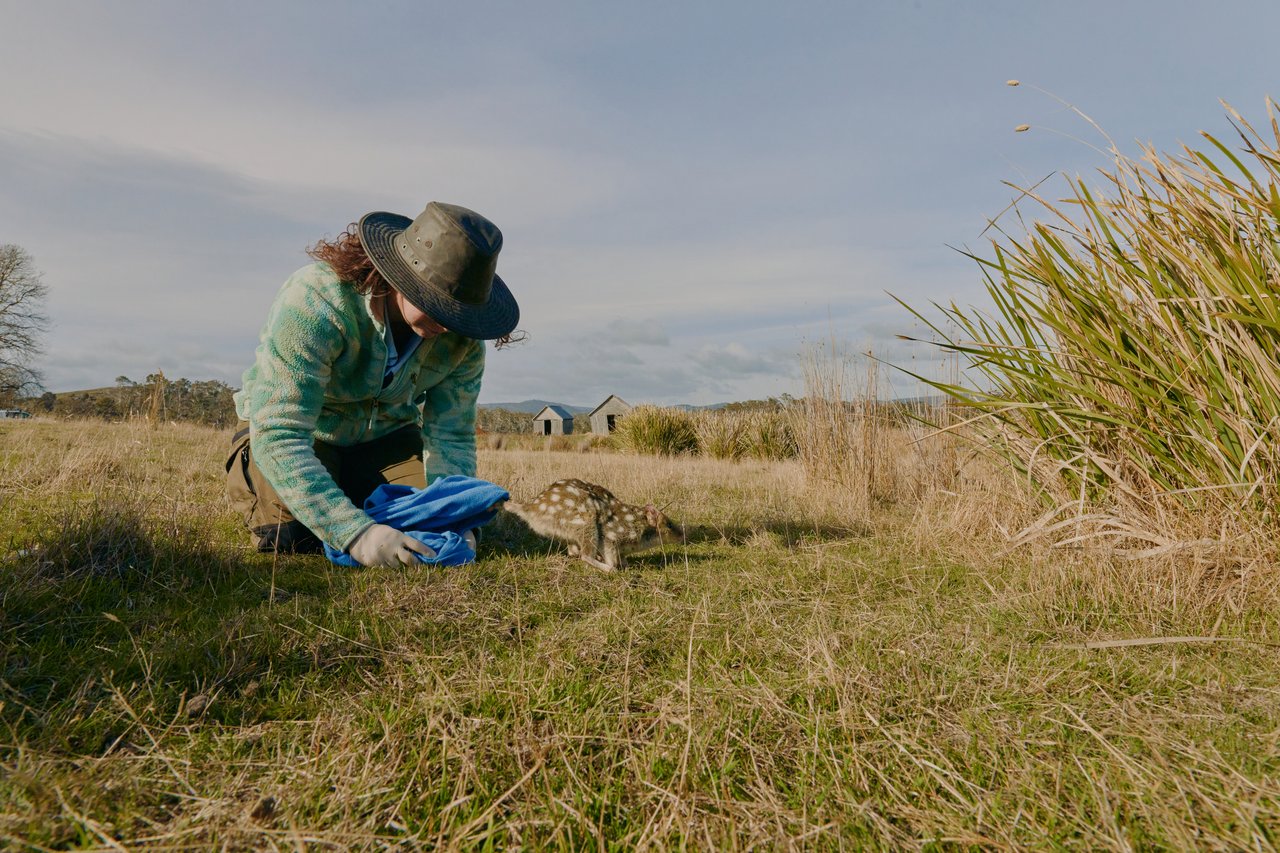
Originally from Queensland, Sophia moved to Tasmania specifically to pursue her postgraduate research at the University. She was lured not only by access to wild quoll populations, but by the University's enviable reputation in environmental and wildlife science.
Sophie was also impressed by the high level of support she has experienced at the University, especially in the early stages of settling into her project, as she learned to manage the complexities of fieldwork, lab analysis, and data interpretation.
“Tasmania is the perfect place to study the eastern quoll in its last stronghold,” she said. “The landscapes, the communities, and the support network within the University all made it the right fit.
“My supervisors have been incredibly helpful. There’s a real sense of collaboration here, between researchers, external partners, and students. It feels like everyone is invested in the outcomes.”
As part of her research, Sophia works closely with conservation organisations, including Tasmania Parks and Wildlife Service, and the Oura Oura wildlife reserve at Liffey, gathering data and contributing to broader management strategies.
“It’s amazing to think that something as small as a fur sample or a footprint can hold so much information.
“That data can tell us about diversity, disease resistance, and even how populations have moved or changed over time.”
Sophia is also passionate about the role of public awareness in wildlife conservation. She often shares updates on her research with the local community, aiming to help people better understand the significance of native species like the eastern quoll.
“Connecting with people, especially younger students or regional communities, is a big part of the work,” she said. “If we want these species to survive, we need broad support and understanding.”
Looking ahead, Sophia hopes her research will support a more coordinated approach to eastern quoll conservation across Tasmania, as well as potential future reintroduction sites on the mainland.
And she is passionate about encouraging others to pursue a career in environmental research as well, her own experiences proving that you can make a meaningful impact in the world by following your curiosity.
“I’d love to see these animals thrive again outside Tasmania,” she said. “But that will take careful planning, long-term commitment, and making sure their genetic diversity and habitat needs are fully understood.
“There’s so much more to discover, and Tasmania is an amazing place to do it.”
Study with us. If you are ready to apply, find out more about studying Natural Sciences.