





Remarkable results achieved in pilot study using sterile insect technology to control codling moth in orchards.
A pilot study of sterile insect technology (SIT) in Australian apple orchards has revealed how this technology can successfully outsmart the age-old pest codling moth.
The Hort Innovation-funded research project (AP18001) led by the Tasmanian Institute of Agriculture (TIA) achieved some remarkable firsts for Australian horticulture, despite the intervention of Covid-19.
The introduction of sterile codling moths (SCM) from Canada was an Australian first for the import from overseas of live animals – without a quarantine period – for direct release in Australia. The team successfully navigated biosecurity import requirements and freight logistics to deliver cartons of live SCM from Canada to Tasmania each week over two seasons. This successfully demonstrated proof of concept for the use of SIT as a tool for controlling codling moth in Australian apple orchards.
Sterile insect technology in a nutshell
Codling moths are sterilised using low dose gamma radiation at a specialist facility in Canada. This reduces their ability to fertilise wild female moths by around 95 per cent.
SIT programs work by flooding the wild moth population with large numbers of sterile male moths to substantially reduce the number of fertile eggs produced. When this is repeated over several seasons, the population crashes and infestations drop below damage threshold
SIT is commonly used to manage pests over an entire district – known as area wide management – but can also be used on individual farms for less mobile pests like codling moth.
This relatively new biological control strategy is used for a range of pests, with fruit fly being a prime example of SIT technology in Australia.
The method is an environmentally friendly way of controlling insect pests that can work well alongside other integrated pest management methods.
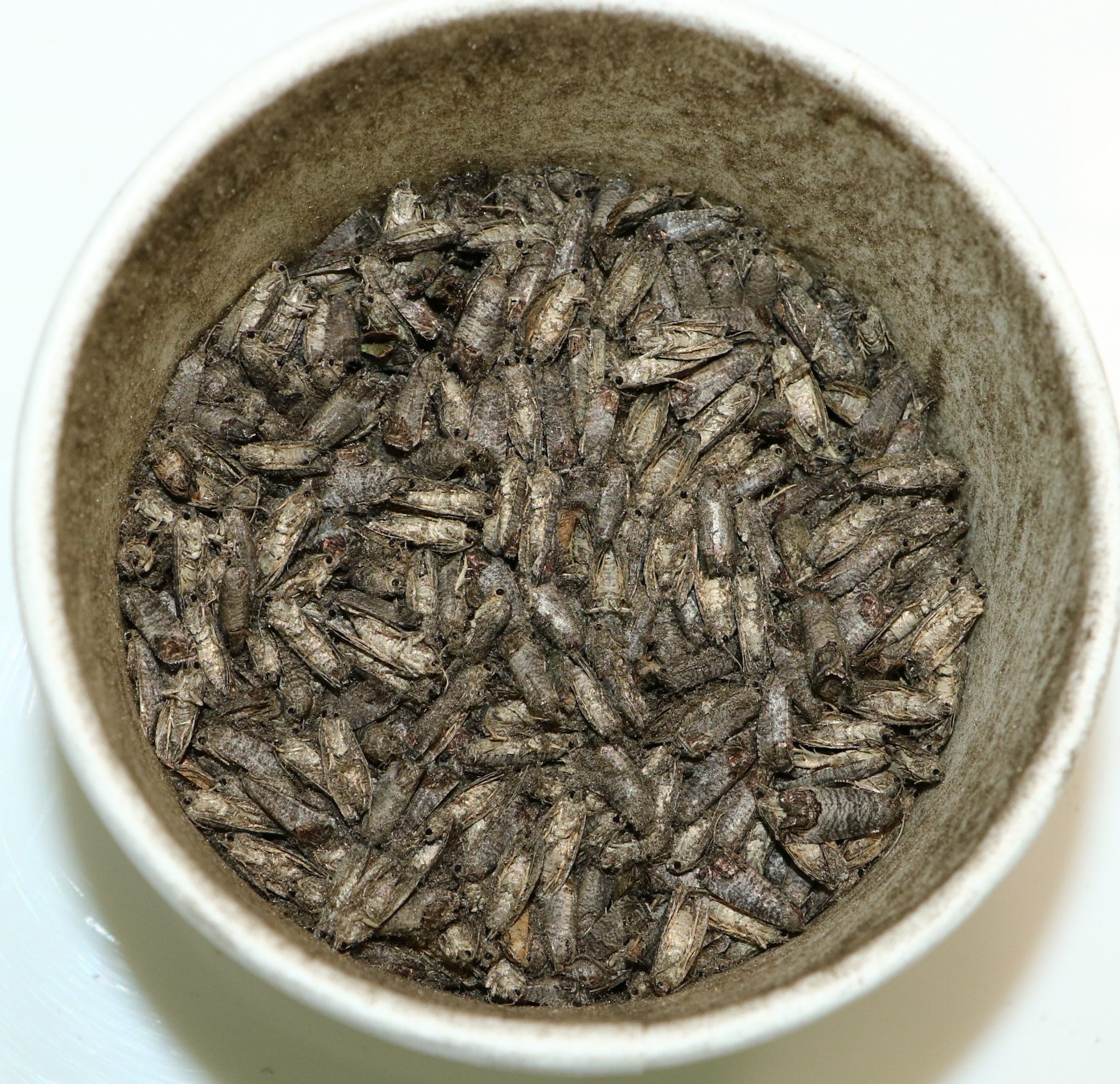
Importing sterile moths – how well did it work?
It was a long haul of 61 hours from moth dispatch in Canada to the release sites in Tasmania. This included road transport from the OKSIR facility in British Columbia, Canada, three flights, customs and quarantine clearance at Hobart airport and further road transport to the orchards. Unsurprisingly, this is a lot longer than the ideal transit time of less than 36 hours!
Dr Guy Westmore from Biosecurity Tasmania ran a series of health and quality checks on the newly arrived moths to make sure they were still fighting fit and ready for orchard release. The moths were given the thumbs up for release based on three key measures: moth weight, mating ability and life span (mortality).
Canadian public holidays and snowstorms were unexpected frustrations for the Tasmanian research team. Peak moth flights to Tasmania tended to coincide with peak Canadian winter weather and Christmas–New Year holidays, all interrupting a consistent supply of moths to the orchard at critical times.
This prompted the team to look at how moths fared with potential transit delays and with extended refrigeration. They didn’t take too kindly to this, with a big increase in mortality from 33 to 89 per cent after five days of refrigeration. The outcome: a maximum of one day’s delay on arrival would be considered acceptable for releasing active moths into the orchard.
Tasmanian orchard trials
The research team monitored the effect of SCM releases on wild moth populations and fruit quality over two growing seasons. Three test orchard blocks were paired with three untreated orchard blocks in Tasmania’s Huon Valley.
They used pheromone traps to monitor weekly catches of both wild and sterile moths in each orchard block, then closely examined the fruit at harvest for signs of codling moth damage.
Rain, rain, rain
A very cold, wet 2022–23 season was less than ideal for moth activity, and sterile moth catches closely followed the weather pattern. Cold or wet days meant fewer moths in traps, while warm, dry days had higher moth numbers in traps.
Did SCM reduce wild codling moth populations?
A hugely encouraging result was the reduction in wild moth numbers at two release sites in the second season of testing relative to their paired site. One measure of success is the ratio of sterile to wild moths caught in traps collected weekly from each orchard.
Wild codling moth numbers were reduced fourfold at release site #1 in mid-November, a time when wild moth numbers peak. This timing indicates successful mating of wild females with sterile male moths.
Sterile moth capture at site #2 was consistently higher than wild moth capture each week, with a peak ratio of sterile to wild moths recorded at 150 to 1.
The results from site #3 were not a fair comparison as the paired release and non-release sites were geographically separated, under different management and had very different base moth population levels. The control site supported low levels of wild codling moth throughout the trial. In contrast, wild codling moth numbers at the release site were much higher than considered desirable for SIT to work effectively, with up to 30 moths per trap.
Was fruit damage reduced using a SCM program?
Fruit damage was reduced at two of the three SCM release sites compared to their paired control site. It is reassuring to see that this follows the same trend as moth population levels and points clearly to the suitability of this technique for Australian apple orchards.
Release site #3 was the exception, with high levels of fruit damage. However, this is not surprising due to the high base levels of wild codling moth at this site. This result reinforces that wild populations need to be below a threshold level for SIT to be effective.
Economic feasibility of an Australian SIT program using SCM
Nic Finger of Fruit Help prepared an economic analysis of a potential SCM program in Australia based on data from the long-running Canadian program.
This provided a real-life longer-term comparison of fruit damage levels using SCM, mating disruption or pesticide use with typical damage between 0.4 and 3 per cent. The cost of typical Australian codling moth control programs was compared to an estimate of the SIT area wide program in Canada. These were combined to compare the rate of return over a 20-year period.
The key findings of the economic analysis:
- SIT is reported to have the lowest damage rates relative to mating disruption and pesticide use only.
- Gains in gross orchard gate income are expected to be higher under SIT relative to mating disruption (+$277.5) or pesticide use only (+$2,295).
- Modelling over 20 years demonstrated an economic benefit to growers when a SIT program cost less than $1,492/ha, compared to pesticide and mating disruption.
- The current cost of implementation in Canada is approximately $1,400/ha.
Progressing SIT for Australian codling moths will rely on whether a business case for local production of SCM stacks up for the size of the Australian industry. This needs to consider the two scenarios of either localised SCM application or an area wide program.
An area wide program works exceptionally well in Canada but would require a similar regulatory framework in Australia to fund this initiative and considerable consultation and collaboration between fruit industries, communities, councils and government.
Where to from here?
The major unknown is the feasibility of producing SCM in Australia. One option is establishing a local SCM rearing facility in Australia. There are currently facilities in Australia for mass rearing and sterilising fruit flies (Port Augusta) and blow flies (Kangaroo Island).
The establishment of a codling moth-specific rearing facility would require an additional specialised facility, potentially alongside the irradiation facilities already in place, as part of a multi species facility to provide economies of scale.
This could be set up independently or in partnership with New Zealand to supply Australian and New Zealand growers. The Kangaroo Island facility is a good recent example of a modern, modular set up for sterile insect production.
The benefit of area wide management compared to individual orchard releases needs to be quantified, including the benefits to residential properties and other industries such as walnut, stone fruit and quince.
Expanding international market access and/or reducing phytosanitary requirements is possible under a SIT program and could be clarified in consultation with the Department of Agriculture, Fisheries and Forestry and market access experts.
Wrapping it up
The pilot study successfully demonstrated proof of concept for the use of SIT as a tool for control of codling moth in Australian apple orchards.
The program proved it is technically feasible to import SCM from Canada and achieve reduced codling moth infestation in Australian apple orchards. However, it has the clear shortcomings of an unreliable supply, vulnerability to disruption, a long transport chain and cost.
There is a financial benefit of using SCM when the cost of implementation is less than $1,400/ha. This will be greater in orchards where fruit damage from codling moth is greater than the 3.1 per cent used in this analysis.
There are multiple additional benefits to the use of SIT in codling moth control programs:
- Environmentally safe.
- Species specific with no adverse effect on non-target organisms.
- Product quality and productivity are improved.
- Provides for residue-free pest management.
- Avoids pesticide resistance and spray drift.
- Compatible with other integrated pest management methods.
Acknowledgements
The Pilot sterile codling moth releases for the apple industry (AP18001) project has been funded by Hort Innovation, using the apple and pear research and development levies and contributions from the Australian Government. Hort Innovation is the grower-owned, not-for-profit research and development corporation for Australian horticulture.
A special thanks is due to our grower partners, Scott Price and Andrew Smith from R& R Smith, Aaron and Nathan Bowden from Bowden Bros Organics and Mark Duggan from Duggan Brand.
View a recent webinar on this topic or watch on YouTube. Hear Dr Sally Bound (Tasmanian Institute of Agriculture) and Dr Guy Westmore (Biosecurity Tasmania) discuss the technology, results of the field releases and future potential of sterile codling moths in Australia.
Read more – Read the final report (PDF)
This article was first published in the Spring 2024 edition of AFG.