


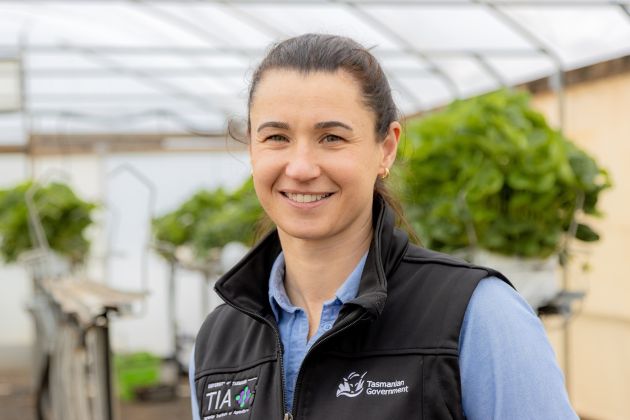
Opinion piece by Dr Rowan Eisner, Agricultural Systems Modeller at the Tasmania Institute of Agriculture
Currently, if a farm has its carbon emissions assessed, land use is not included in the calculation. It doesn’t matter whether a cow takes up one hectare or 1000ha, the result is the same. The calculators don’t even ask for the land use.
Since the emissions are calculated by adding up greenhouse gases emitted, such as methane from cattle, nitrous oxide from fertiliser use, and CO2 from fuel use, and then subtracting any carbon stored on the land in the form of vegetation and soil carbon, you might think that using 1000 times as much land should be taken into account.
If the land is used for grazing, it can’t store much carbon. It certainly contributes significantly to the GHG problem.
The reason land use isn’t counted is that emissions are calculated per year. So, if the land clearing happened prior to a baseline year when the accounting process starts for a farm, then those losses are excluded. When paying for emissions reductions or carbon storage, funders want to pay for improvements that happen because of the incentives and not for improvements which would have happened anyway. This ‘additionality’ provision means that farmers can make the most money from carbon by starting with land which is in poor condition so there is more room for improvement.
This has the unfortunate effect that good farmers frequently find they can’t get paid for their stored carbon. It also provides perverse incentives to degrade land so they can be rewarded for improvements. There are rules to try and prevent this, but it happens anyway.
Globally, land has the potential to store about a third of the excess GHGs in the atmosphere. The largest potential in the agricultural sector is to improve the land-use efficiency of the extensive grazing sector, which uses about 70% of agricultural land, or 35% or all usable land on Earth.
Extensive grazing uses about six times as much land as is possible using land-efficient methods. This would require providing more high-yielding feeds, and the price the farmers get for the carbon and biodiversity they save as a result would need to pay for this.
Much of north America and Europe have already transitioned to more land-efficient production methods and this is associated with considerable reforestation.
Cropping measures yield in tonnes per hectare, which is a measure of land-use efficiency. What if the livestock sector adopted a similar live weight gain per hectare measure? This could be referenced against the natural carbon storage of the landscape and its current storage so naturally extensive systems need not be disadvantaged.
What might more land-efficient livestock production systems look like in Australia?